
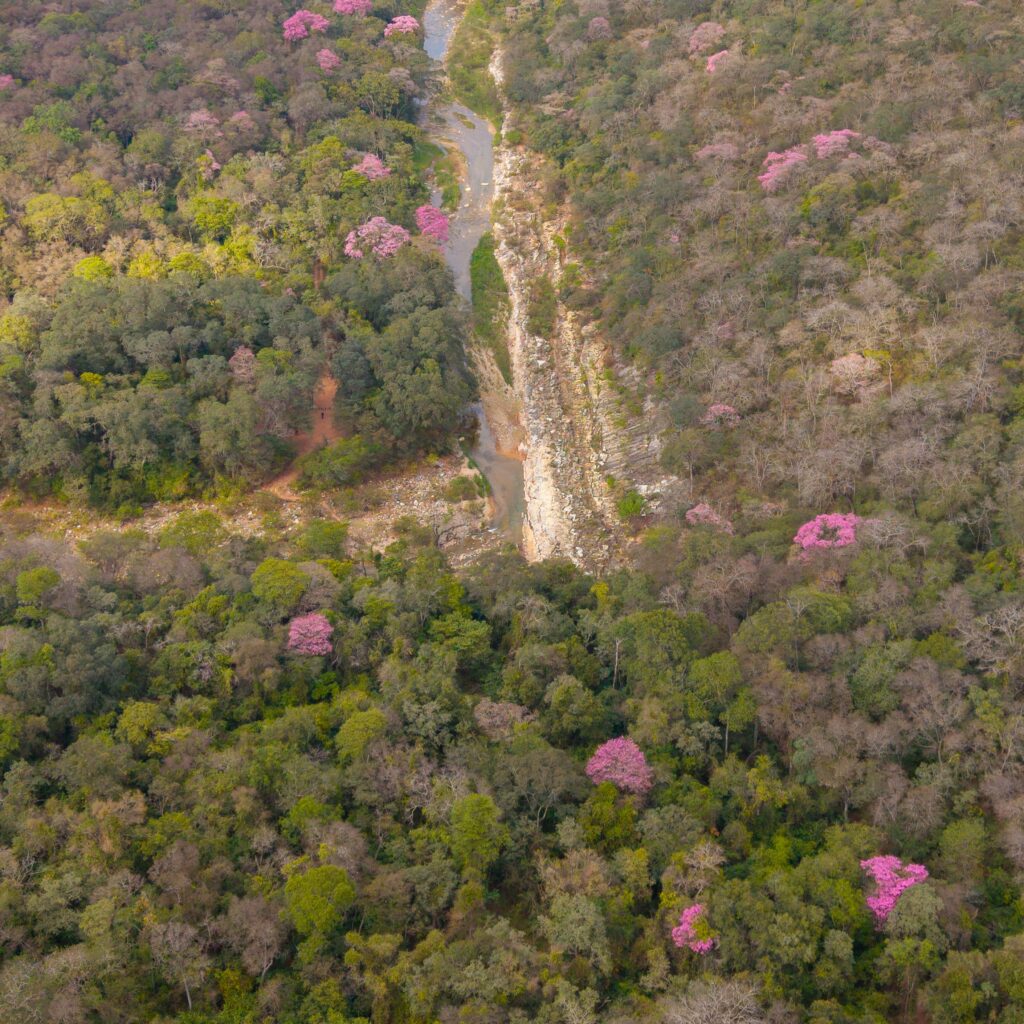
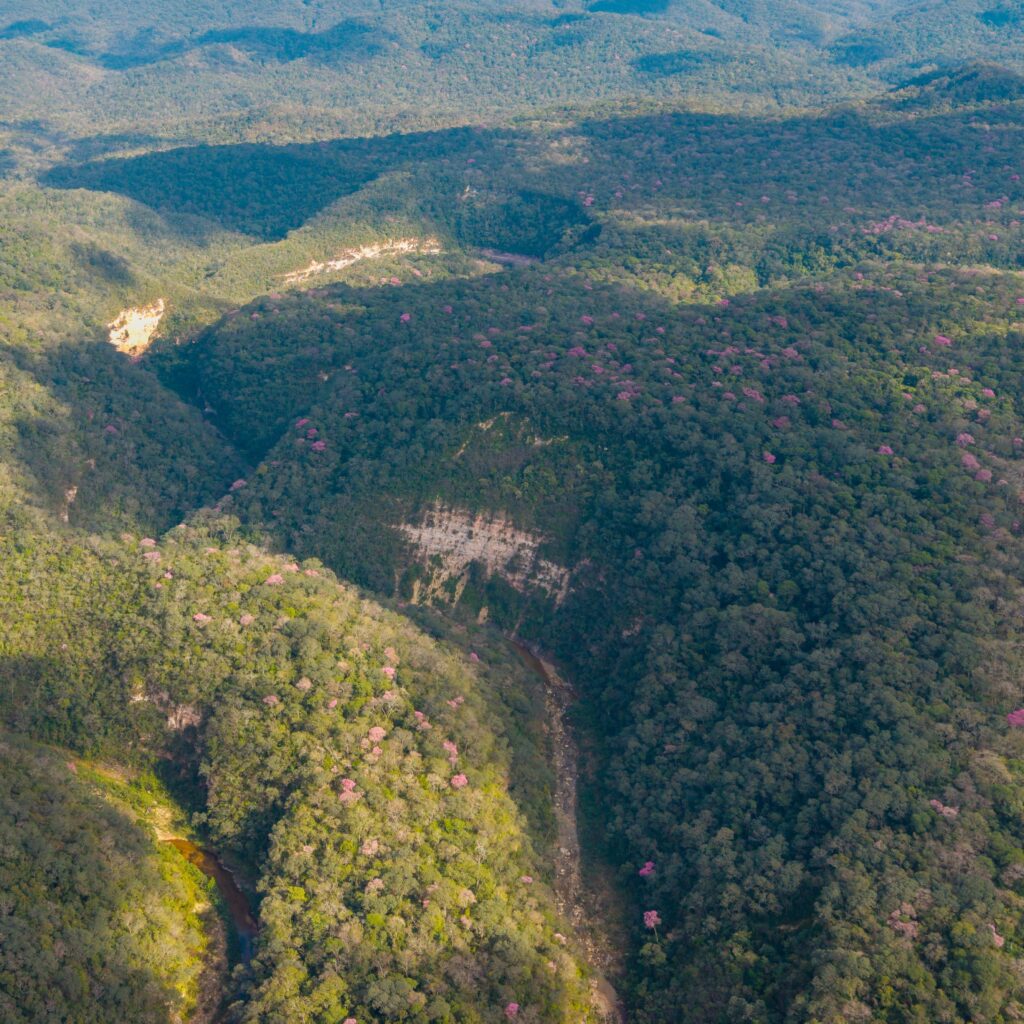
Forests play a vital role in regulating the global and local climate as they are among the largest existing natural carbon stores. When forests are cleared or burnt, they transition from carbon sinks into major carbon sources. Protecting existing native forests is one of the most cost-effective ways to limit global warming.
Every ha of forest we protect from deforestation through our projects keeps carbon safely locked in trees, roots, and soil rather than releasing it into the atmosphere.



We pursue our projects to contribute to the goals of the Paris Agreement. Its overarching goal to limit the increase in global temperatures to less than 2 degrees below pre-industrial levels, with an even stricter target of 1.5 degrees, is the baseline of our work.
In our view the protection of existing forests should get the highest priority in nature based solutions. However, in the past not every project has lived up to its promises. This is why we assess every potential project with the same questions: how much of a difference does our intervention actually make to a forest? Is there a real, near-term threat? For each project, we carefully and conservatively model its specific pressures, from agricultural expansion to illegal logging and fire.
Our Position on Carbon Credits
VisionNetZero supports the financing of climate and biodiversity action through the development of high-quality nature-based solution projects which generate carbon credits (e.g. reforestation, blue carbon, REDD+) carbon investors use in their communication.
However, whenever financing mechanisms such as carbon credits are part of a climate or biodiversity project, these credits have to be certified and independently verified under an internationally recognized standard, like the Gold Standard or Verra’s Verified Carbon Standard (VCS). The verification process must be strict, and all estimates have to be conservative: every project must establish a baseline scenario, quantify carbon stocks, and undergo independent validation and verification by accredited third-party auditors before any credits are issued. Deductions for leakage, uncertainty, and non-permanence risk are applied throughout, and monitoring continues for the full duration of the crediting period.
The question of how to properly present corporate commitments to climate action is immensely important. Making the right sustainability claim makes it possible to communicate the applied measures and its contribution to climate action in a compelling way. With changed conditions on the carbon market, however, primarily due to the Paris Climate Agreement’s entry into force, claims such as ‘climate neutral’ or ‘carbon compensated’ no longer meet current transparency requirements. By purchasing carbon credits, companies mobilize funds for the implementation of additional climate action measures. And this is exactly how it should be referred to for transparent communication.
In any case, the investors’ priority should be to first look at emission reduction measures in their own value chain before looking at the purchase of carbon credits as an additional climate contribution.
1
Baseline
Establish a conservative baseline scenario for the project area.
2
Quantify
Quantify carbon stocks using approved VCS methodologies.
3
Validate & Verify
Independent validation and verification by accredited third-party auditors.
4
Monitor
Ongoing monitoring throughout the full crediting period, with deductions applied for leakage, uncertainty, and non-permanence risk.